

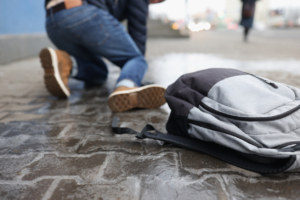
Most people who get hurt in a slip and fall were not doing anything unusual.
They were walking into their apartment building, stepping off a curb, or moving through a grocery store aisle.
The hazard was already there.
The injury happened before they had any real chance to react.
Why Ordinary Walking Environments Can Become Dangerous
The Bronx is a borough of dense foot traffic, aging building stock, and sidewalks that absorb a lot of wear.
Residents move through the same environments every day, which creates a false sense of familiarity.
A lobby that looks fine in the morning can be wet and slippery by afternoon.
A sidewalk crack that has been there for months becomes genuinely dangerous the first time someone steps on it at an angle or in low light.
Falls among adults 65 and older caused over 43,000 deaths in 2024, making falls the leading cause of injury death for that group, and emergency departments recorded about 4.5 million visits for older adult falls that same year, according to the CDC.
Older Bronx residents who rely on walking as their main way to get around face these risks every time they leave home.
The environments that produce the most injuries are not extreme or unusual.
They are the ones people use every single day.
Sidewalks, Cracks, and Uneven Surfaces
Sidewalk conditions in the Bronx vary block by block.
Tree roots push up concrete slabs over time.
Freeze-thaw cycles crack pavement and widen minor gaps.
Potholes and damaged asphalt appear at crosswalk transitions where road and sidewalk meet at uneven heights.
The problem with most sidewalk defects is that they are easy to miss until you are already stepping on them.
A raised slab edge of an inch or two is nearly invisible to someone walking at a normal pace, especially when attention is split between traffic, a phone, or other pedestrians.
By the time a foot catches the edge, there is no time to recover.
Responsibility for sidewalk maintenance in New York City is not always straightforward.
Under New York City Administrative Code Section 7-210, most property owners, not the city, are responsible for keeping the sidewalk in front of their property in a reasonably safe condition.
That means the owner of a building next to a cracked or raised section of sidewalk may bear legal responsibility when someone is injured, depending on the specific facts.
Stores, Restaurants, and Other Commercial Spaces
Commercial spaces in the Bronx produce a steady pattern of walking hazards.
Spilled liquids in grocery store aisles are a well-known risk, but a recently mopped floor without a visible warning sign is just as dangerous.
Boxes or merchandise left in walkways during stocking hours narrow the path and force customers to navigate around obstacles they did not expect to find.
Entrance areas are particularly problematic.
Rain, slush, and snow tracked in from outside collect near the front door, and without adequate mats or frequent cleanup, that moisture spreads across the floor in a thin, nearly invisible film.
A customer walking in from a wet street has no reason to expect the floor inside to be slippery.
In a commercial premises liability situation, one of the central questions is whether the property owner or business knew about the dangerous condition or whether they reasonably should have known about it through ordinary inspection and maintenance.
A spill that happened moments before someone fell is treated very differently from one that sat unaddressed for an extended period.
If a fall in the Bronx has left someone with medical bills, missed work, or lasting physical limitations, speaking with a Bronx slip and fall lawyer is a practical way to understand whether the circumstances support a claim.
An attorney can look at the specific conditions, the property ownership, and the timeline to give an honest assessment of what options may be available.
Snow, Ice, and Seasonal Fall Risks
Winter creates a different category of walking hazard throughout the Bronx.
Icy sidewalks, building entrances, exterior stairs, and parking areas can turn treacherous within hours of a temperature drop or overnight freeze.
Melting snow that refreezes after dark is particularly hard to see, and black ice on a flat surface offers almost no visual warning.
New York law draws a meaningful distinction between conditions that develop during an active storm and those that persist once the storm has ended.
A property owner is generally not expected to clear ice and snow while it is still actively falling.
Once the weather stops, though, there is an expectation that reasonable steps will be taken to address what remains.
Ice that sits on a building entrance or stairway for an extended period after a storm raises different questions than a slip that occurs in the middle of a snowfall.
Building entrances deserve particular attention in winter.
The transition from a salted sidewalk to an unsalted entrance step, or from a dry lobby floor to a wet mat, creates hazards that are easy to overlook until someone is already on the ground.
What to Do After a Bronx Slip and Fall
The steps taken right after a fall can have a significant effect on any claim that follows.
If the situation allows:
- Seek medical attention as soon as possible, even if the injury feels minor at first.
- Photograph the exact location and the visible hazard before conditions change.
- Write down the precise location, the time, what you were doing, and what you believe caused the fall.
- Collect contact information from anyone who witnessed the incident.
- Report the fall to the property owner, building manager, or business on duty.
Preserve everything relevant: the shoes and clothing worn that day, photographs, medical records, and any written communications with the property owner.
Injuries from falls often appear or worsen in the days after the accident.
Getting evaluated promptly creates a medical record that accurately reflects what happened and when.
When a Slip and Fall May Become a Legal Claim
Not every fall produces a viable legal claim, and not every dangerous condition automatically means someone was negligent.
Premises liability law in New York requires a closer look at the specific facts.
Under New York City Administrative Code Section 7-210, most property owners are responsible for keeping adjacent sidewalks reasonably safe.
When a property owner or business fails to maintain safe conditions, and someone is injured as a result, that owner may be held liable under New York premises liability law.
In practical terms, a claim generally requires showing that a dangerous condition existed, that the property owner had a legal duty to address it, that the owner knew or should have known about it, and that the condition caused the injury.
Each element matters.
A hazard that existed for a long time and was never corrected tells a different story than one that appeared moments before the accident.
Where to Start
The Bronx presents real and recurring walking hazards, and many of the injuries they cause are not random.
They follow from conditions that existed, were not corrected, and were encountered by someone who had no reason to expect them.
Anyone hurt in a fall should take the situation seriously, document what happened, and find out whether the law offers a path forward.


Leave Your Comment