

Strong evidence is the foundation for a successful personal injury claim.
Even with a compelling account of your accident, Indiana law requires evidence to prove the negligence of the at-fault party.
It is important to gather the necessary evidence to support your claim to receive compensation.
“An accident case lives or dies based on the evidence.
You cannot simply make assumptions.
You need hard evidence to support all aspects of your claim,” says Indiana personal injury attorney Caleb Fleschner of Fleschner, Stark, Tanoos & Newlin.
In this article, we will discuss the evidence needed to support your claim, covering photographic evidence, medical records, digital data, and witness testimonies.
Photographic Evidence
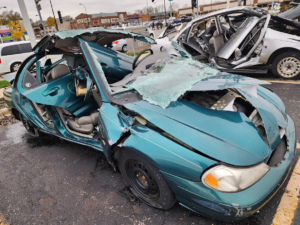
Photo and video evidence can make or break an Indiana car accident claim.
Under Indiana’s modified comparative fault system, clear visuals can resolve conflicting accounts and help prove negligence before the memory becomes difficult to recall or evidence disappears.
The ideal time to take photographs of a car accident is immediately after a crash.
This is because the vehicles have not yet been moved, and the weather has not compromised any evidence.
Take photographs of any skid marks, damaged cars, and street signs.
This provides a clear picture of what occurred.
Car dash cams and security cameras nearby can catch footage of the accident.
These can be used to recreate the accident scene, verify how the accident occurred, and establish that you are not at fault.
It is important to obtain this evidence within a few days after the accident because commercial and private surveillance systems frequently overwrite video footage.
Medical Records
Obtaining medical records is crucial because Indiana law requires proof that your injuries resulted from the accident.
It is important to seek medical help immediately after the accident, whether at an emergency room, urgent care facility, or primary care doctor.
Delaying medical treatment allows insurers to claim your injuries are not critical or a result of the incident.
To build a strong claim, collect all relevant medical information that proves your injuries were inflicted by the accident.
Provide your personal injury attorney with doctor’s notes, prescription records, and billing statements that outline past and ongoing treatments.
Building a paper trail gives your attorney the necessary evidence to fight for fair compensation.
Digital and Technological Evidence
Modern cars come with their own version of a “black box,” an event data recorder that tracks speed, braking, and whether you had your seatbelt on right before a crash.
Personal injury attorneys work with accident reconstruction professionals to gather and analyze this data, creating a factual timeline of the accident.
To collect this information, your attorney must provide an immediate legal preservation letter to obtain the vehicle and download the data before it is cleared.
Phone data is also important digital evidence.
Call logs, texts, and GPS location can reveal if someone was texting and driving, giving a clear picture of what was happening leading up to the accident.
Lawyers act quickly to obtain these records, issuing subpoenas or preservation requests because phone data can be easily deleted.
Cellular data can provide undeniable proof that the other driver’s negligence was the cause of the accident.
Witness Testimony
Witness testimonies provide a third-party perspective that can validate your account of the accident and firmly establish the negligence of the at-fault party.
Eyewitnesses can provide unknown information, such as vehicle speeds, driver behavior, and traffic light status right before the incident.
Because memories fade quickly, interviewing these witnesses and securing their statements immediately after the crash is crucial evidence for your claim.
Expert witnesses, such as accident reconstruction professionals, doctors, and engineers, are also vital for your personal injury claim.
They can explain the technical aspects to judges and jurors, proving your injuries and financial issues are a direct result of the accident.
Your Indiana personal injury attorney will handle sourcing these expert witnesses for your case.
Conclusion
Navigating the aftermath of an accident can be stressful, but securing solid evidence is the first crucial step to ensure you receive fair compensation.
From photographic and video evidence to medical records, digital evidence, and witness testimonies, every piece works together to establish the at-fault party and prove your injuries are a result of the accident.
Because there is a risk that evidence can disappear quickly, consulting with an Indiana personal injury attorney immediately ensures that every detail is preserved, giving your claim a strong foundation for full compensation.


Leave Your Comment