

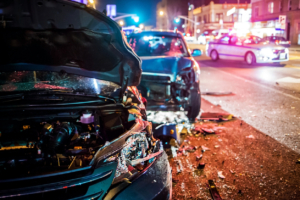
Pulaski County doesn’t just lead Arkansas in traffic deaths.
It tops the state for injuries too, with 377 serious ones recorded in 2022, about 13% of Arkansas’s total, according to state traffic-safety data.
Across Arkansas, crashes have climbed roughly 18% since 2015.
That’s a lot of hurt people filing a lot of claims.
And here’s the thing every one of those claims has in common.
It lives or dies on evidence.
The truth is that being hurt isn’t enough.
You have to prove what happened, who caused it, and what it cost you.
So how much proof is actually required?
Less than most people fear, but it has to be the right kind.
A personal injury lawyer spends much of a case simply building that proof.
Knowing what counts can determine your claim’s outcome.
The Bar Is Lower Than You Might Think
Let’s start with some relief.
An injury claim isn’t a criminal case, so you don’t have to prove anything “beyond a reasonable doubt.”
The standard is called a preponderance of the evidence.
In simple terms, you just have to show that your version is more likely true than not.
Think of it as tipping the scales slightly past the halfway point.
You’re not proving certainty, just what most likely happened.
Four Things You Have to Prove
Underneath every injury claim sit four basic building blocks.
Miss one, and the whole thing stumbles.
First, that the other person owed you a duty of care, like driving safely.
Second, that they broke it.
Third, that their mistake actually caused your injury.
And fourth, that you suffered real losses because of it.
Evidence is how you check each box.
Leave one blank, and even a sympathetic story can fall apart.
Evidence That Pins Down Who Was at Fault
Start with the question of blame.
The scene itself does much of the talking.
The police report is a common starting point, though it isn’t the final word.
Photos of the vehicles and the road, skid marks, and traffic or security footage all help.
Independent witnesses are critical here, since they have no stake in the outcome.
In messier cases, a crash reconstruction expert can piece the whole sequence back together.
Evidence That Links the Crash to Your Injuries and Costs
Proving the other driver messed up is only half the job.
You also have to connect that mistake to your actual harm.
Medical records are the backbone here, especially a doctor’s clear opinion that the crash caused your injury.
Insurers love to argue your pain came from something else, so that link really matters.
Seeing a doctor right away makes it much harder to dispute.
Then come the dollars: medical bills, pay stubs for lost wages, and receipts for out-of-pocket costs.
Together, they turn “I’m hurt” into a concrete number.
Your evidence does one more job.
It helps fix how much of the crash gets blamed on you.
Arkansas splits fault by percentage, and your recovery shrinks by whatever share lands on you.
Cross into being half or more at fault, and you can lose your right to recover anything.
The other side knows this, so they’ll use any loophole in your proof to nudge your percentage higher.
Solid evidence is what keeps that number where it belongs.
It’s Quality, Not Quantity
A winning claim isn’t about burying the insurer in paper.
Most claimants misunderstand this.
A few strong, consistent pieces beat a mountain of weak ones every time.
One clear photo can outweigh a thick stack of vague paperwork.
What counts is whether your evidence tells one clear, connected story.
It also pays to move fast, since photos fade, footage gets erased, and memories blur.
The sooner you lock down the proof, the stronger it stays.
So how much evidence do you need?
Just the right pieces, all pointed in the same direction.
You need enough to tip the scales past “more likely than not” on fault, on causation, and on cost.
Gather it early, keep your story consistent, and let the documents carry the weight.
That’s usually what separates a claim that gets paid in full from one that gets picked apart.


Leave Your Comment