

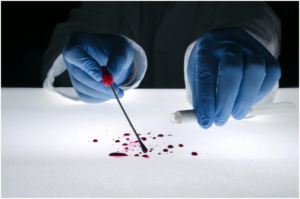
For professionals pursuing careers in forensic science, understanding how physical evidence is analyzed in weapons possession cases provides valuable insight into the intersection of laboratory work and courtroom testimony.
In Georgia, where weapons charges can carry serious penalties, forensic experts play a critical role in establishing facts that both defense attorneys and prosecutors rely on to build their cases.
Forensic evidence in weapons cases goes beyond simply identifying a firearm.
It involves ballistic analysis, trace evidence examination, DNA testing, and expert testimony that can determine whether a weapon was recently fired, who may have handled it, and whether it matches evidence from a crime scene.
Types of Forensic Evidence in Weapons Cases
When law enforcement recovers a firearm in a possession case, multiple types of forensic analysis may be conducted.
Physical examination of the weapon can reveal whether it functions properly, has been modified, or shows signs of recent use.
Firearms examiners test-fire weapons to create comparison samples and examine the barrel for residue patterns.
Trace evidence analysis looks for gunshot residue (GSR) on a suspect’s hands, clothing, or surrounding surfaces.
This microscopic evidence can indicate recent proximity to a discharged firearm, though its presence alone does not prove someone fired the weapon.
Environmental factors and time elapsed affect GSR reliability.
Biological evidence, such as DNA and fingerprints, can link specific individuals to weapons.
Touch DNA technology allows forensic scientists to recover genetic material from gun grips, triggers, and magazines, even when traditional fingerprints are not visible.
These techniques require specialized training and meticulous laboratory protocols.
Ballistic Analysis and the NIBIN System
One of the most sophisticated forensic tools used in weapons cases is the National Integrated Ballistic Information Network (NIBIN), maintained by the Bureau of Alcohol, Tobacco, Firearms, and Explosives.
This system allows forensic examiners to compare fired cartridge cases and bullets against a national database of ballistic evidence.
When a firearm is discharged, it leaves unique microscopic markings on the bullet and cartridge casing.
Georgia’s Division of Forensic Sciences operates firearms analysis laboratories that examine these characteristic marks to determine whether a recovered weapon matches evidence from shooting incidents.
This analysis requires extensive training in microscopy, metallurgy, and pattern recognition.
NIBIN technology enables forensic scientists to establish connections between multiple incidents, even when no suspect has been identified.
For forensic professionals, proficiency with this system represents a valuable specialization within firearms examination.
The Firearms Examination Process
Forensic firearms examiners follow rigorous protocols when analyzing weapons in possession cases.
The examination begins with documentation of the weapon’s make, model, serial number, and condition.
Examiners then determine whether the firearm is operable, a legally significant question in many Georgia weapons charges.
Test-firing procedures involve discharging the weapon in a controlled environment to collect bullets and casings for comparison.
Examiners use comparison microscopes to analyze striations, firing pin impressions, and ejector marks.
This detailed work requires both technical expertise and the ability to document findings that will withstand courtroom scrutiny.
Serial number restoration represents another specialized skill.
When serial numbers have been obliterated, forensic scientists use chemical etching to reveal the original markings.
This work can prove crucial in tracing a weapon’s history and establishing its legal status.
Expert Testimony and Legal Proceedings
Forensic scientists who analyze weapon evidence must be prepared to explain their findings in court.
Unlike laboratory work conducted in controlled environments, courtroom testimony requires communicating complex technical concepts to judges and juries without specialized scientific backgrounds.
Defense attorneys in Georgia weapons cases often challenge forensic evidence on multiple grounds, including issues with the chain of custody, laboratory procedures, and the interpretation of results.
Forensic experts must maintain detailed documentation and defend their methodologies under cross-examination.
This aspect is similar to other forensic disciplines, such as bloodstain pattern analysis, in which expert interpretation of physical evidence significantly affects case outcomes.
When individuals face weapons possession charges, both prosecutors and defense counsel rely on forensic evidence to establish facts.
An experienced Atlanta weapons charge defense lawyer will carefully review all forensic reports to identify potential weaknesses, from contaminated evidence to flawed testing procedures.
This adversarial process ensures forensic analysts must adhere to the highest professional standards.
Career Development in Forensic Firearms Analysis
The career path typically requires a bachelor’s degree in forensic science, chemistry, or a related field, followed by extensive on-the-job training.
Many forensic laboratories, including Georgia’s Division of Forensic Sciences, offer structured apprenticeships lasting two to three years before analysts can independently examine evidence and testify in court.
Professional certification through organizations such as the Association of Firearm and Tool Mark Examiners (AFTE) demonstrates expertise and commitment.
Continuing education is essential, as new technologies, legal standards, and analytical techniques constantly evolve.
Forensic scientists must also maintain objectivity and resist pressure to reach predetermined conclusions.
The work offers intellectual challenges and the satisfaction of contributing to the justice system, but it also demands precision, patience, and the ability to defend one’s work under intense scrutiny.
Understanding the Professional Impact
Forensic evidence in weapons possession cases demonstrates the critical role that scientific analysis plays in Georgia’s criminal justice system.
For aspiring forensic professionals, these cases illustrate the technical skills, ethical standards, and communication abilities required to succeed in the field.
Whether analyzing ballistic evidence, recovering trace materials, or providing expert testimony, forensic scientists must balance scientific rigor with the practical realities of legal proceedings.
This combination of laboratory expertise and courtroom performance makes forensic firearms analysis one of the most demanding and impactful specializations available to those pursuing careers in forensic science.


Leave Your Comment