

Quick Answer
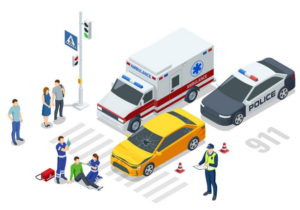
Knowing how to handle pedestrian accident claims means acting quickly on evidence, documenting injuries thoroughly, and working within provincial limitation periods.
A skilled injury counsel reconstructs the collision, calculates current and future losses, negotiates with adjusters, and prepares for trial when needed.
Strong outcomes rely on procedural accuracy, biomechanical insight, and a disciplined approach to insurer engagement from the first day forward.
Introduction
Few legal files carry the urgency and emotional weight of a pedestrian collision.
Injuries tend to be severe, fault is rarely straightforward, and insurance carriers begin building their defence long before the injured party leaves hospital care.
Understanding how to handle pedestrian accident claims starts with recognizing the procedural pressure that builds within hours, from preserving roadway evidence to capturing accurate medical baselines that support future loss calculations.
Speed differentials, lighting conditions, and crosswalk geometry all shape liability under provincial traffic statutes.
Engaging a qualified lawyer for pedestrian accident injuries gives the injured party a clear framework for evidence gathering, expert retention, and settlement strategy.
In practice, the choices made during the first month of a file shape its eventual value far more than any aggressive posturing later in the process.
Mapping the Pedestrian Accident Claim Process Explained
Every collision file moves through defined procedural stages, each governed by strict deadlines and evidentiary standards.
The injured party must coordinate treatment, statutory notice, and adjuster communication while still recovering.
Getting the pedestrian accident claim process explained correctly at the outset prevents quiet errors that resurface during settlement.
Preserving the Evidence Window
The opening 72 hours are decisive.
Roadway markings fade, surveillance footage cycles over, and witness memories soften quickly.
A well-managed file begins with formal preservation letters issued to nearby businesses, transit operators, and municipal traffic services.
Scene reconstruction data, including skid measurements and final rest positions, often determines liability allocation under provincial fault principles.
Building Medical Causation
Adjusters scrutinize any gap between the incident and the first clinical visit.
Continuous treatment notes, specialist referrals, and diagnostic imaging form the backbone of a damages claim.
The injured party should follow recommended care without interruption, since treatment gaps are routinely cited by carriers to argue that resolved or unrelated symptoms.
Expert Tip: Maintain a daily symptom journal.
Entries describing pain levels, mobility limits, and functional impact carry real weight during mediation, especially for soft tissue and concussive injuries lacking visible diagnostic markers.
Meeting Statutory Deadlines
Provincial legislation imposes firm windows that shift depending on whether a municipal authority, a private driver, or an uninsured motorist fund is involved.
Missing a notice deadline can extinguish an otherwise valid file entirely.
The standard procedural sequence typically unfolds as follows:
- Immediate medical assessment and police report filing
- Statutory notice to the at-fault carrier within the prescribed windows
- Independent medical examinations and expert retention
- Disclosure exchange and damages quantification
- Negotiation, mediation, or formal litigation when settlement stalls
The result is a file built on procedural integrity rather than reactive scrambling.
What Strong Legal Representation Actually Looks Like

Effective work on vulnerable road user files blends analytical depth with applied science and disciplined client advocacy.
Understanding what does a personal injury lawyer do in accident cases reveals a role that fuses litigation craft with technical fluency.
Analytical and Forensic Fluency
The skills needed for personal injury lawyer work in this niche reach well past oral advocacy.
Counsel must read biomechanical reports, sightline studies, and human factors analyses to defeat contributory negligence allegations.
This is the dimension most surface guides overlook.
Quantifying driver reaction time against measured pedestrian crossing speed can shift liability percentages by twenty points or more during negotiation.
Negotiation, Discipline, and Client Communication
How lawyers handle accident injury cases turns on calibrated insurer engagement.
Adjusters operate within set authority limits, and experienced counsel knows precisely when to escalate, when to mediate, and when to file.
Equally important is translating clinical complexity into plain language so the injured party can make informed decisions throughout the process.
Capabilities that distinguish strong practitioners include:
- Forensic literacy across collision reconstruction and injury causation
- Procedural discipline with limitation periods and disclosure rules
- Negotiation calibration informed by carrier reserve patterns
- Trial readiness that signals a genuine willingness to litigate
- Empathetic communication across prolonged recovery timelines
| Capability | Baseline Practitioner | Advanced Practitioner |
|---|---|---|
| Evidence Handling | Document collection | Expert witness coordination |
| Damages Modelling | Standard heads of loss | Actuarial future care costing |
| Carrier Strategy | Template demand letters | Reserve-based negotiation |
| Litigation Posture | Settlement focused | Trial credible at all stages |
The outcome is counsel whose preparation quietly shapes results long before any hearing date approaches.
Future Proofing Your Recovery and Long-Term Case Strategy
Settlement is a milestone, not the finish line.
Thoughtful long-term planning shields the injured party from future medical needs, income disruption, and quiet procedural issues that emerge after the file closes.
Forecasting Future Care
Catastrophic injuries often demand ongoing rehabilitation, assistive equipment, and home modifications.
A properly structured settlement reflects inflation-adjusted future care costs, projected across actuarial life expectancy tables.
Provincial standards across Alberta recognize these heads of loss when supported by a qualified medical opinion.
Underestimating long-horizon needs remains the most common error in self-represented files.
Selecting the Right Counsel
Choosing representation deserves the same care given to choosing a surgeon.
Confirmed practice focus, transparent fee structures, and accessible communication channels matter as much as published results.
Verifying an office through a credible directory listing adds a useful layer of confidence during early due diligence.
Additional Tip: Ask for a written case theory during the initial consultation.
Counsel who can articulate liability arguments and damages strategy in the first meeting tend to maintain that clarity throughout the matter.
When weighing representation, consider:
- Demonstrated focus on vulnerable road user files
- Clear contingency fee disclosure in writing
- Direct access to lead counsel rather than intake staff
- Documented experience with mediation and trial work
- Established relationships with medical and forensic experts
Final Takeaways for a Stronger Injury Recovery
Strong outcomes in vulnerable road user files come down to early action, accurate documentation, and disciplined procedural execution.
Evidence preservation, medical continuity, and statutory compliance set the foundation, while seasoned counsel translates that groundwork into fair compensation.
Long-term planning around future care, tax treatment, and benefits coordination protects the injured party well past settlement.
Approached with rigour from day one, knowing how to handle pedestrian accident claims becomes the clearest path toward meaningful recovery and lasting financial stability.


Leave Your Comment