

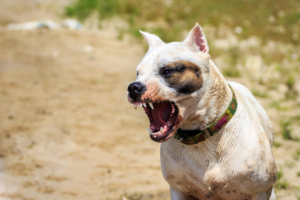
K9 officers need to be familiar with the major laws associated with K9 unit work, including what to do in the event of their dog biting someone accidentally or in the case of litigation involving excessive force.
The frameworks for K9 bite liability vary between states, but it’s essential to understand how they function for context and informed decision-making.
Unnecessary bites are a real risk involved with the work, and handlers need to know the possible legal consequences, as well as real cases of K9 unit misuse.
The Two Liability Frameworks
There are two main frameworks associated with K9 unit work and dog bites in general.
The first is the Federal Constitution Framework based on Graham vs. Connor.
This framework requires that K9s are used based on reasonable objectiveness, consisting of three factors:
- Crime severity
- Whether the suspect poses an immediate threat
- Whether the suspect is actively resisting or evading arrest
The other framework will depend on each state’s dog bite liability rules, and whether they’re strict liability or follow the one-bite rule.
In strict liability states, dog owners are liable for injuries caused by their dog regardless of their prior knowledge of the dog’s propensity for dangerous behavior.
Illinois is an example of a strict liability state, which means that whenever a dog attacks someone peacefully conducting themselves in a place they have a legal right to be in, the owner or handler is automatically responsible.
This goes for any injury, and not just bites.
This means lawyers can focus on maximizing compensation rather than proving the dog’s history of aggression.
And the compensation amounts are pretty high.
What dog bite settlements look like in Illinois is typically in the range of $15,000 to $35,000, with severe injuries going above $100,000.
One-bite rules, such as those in Texas or Virginia, require proof that the owner knew or should have known of the dog’s dangerous propensities before the incident.
They are also called “one free bite” states because the first incident doesn’t usually trigger liability without evidence of previous aggressive behavior, such as animal control records or witness testimonies.
These are mostly focused on civilian dog bites, but the laws can be applied if there is proof that the police dog injured someone off-duty, they hurt an innocent party, or the handler deployed the dog in a way that breaks K9 use policies.
Police K9 Exemptions and Rules
Some states, like New York, explicitly exempt K9s from their dog bite statutes, meaning they operate under a different set of rules than civilian dogs.
In case the bite or injury has happened while the K9 officer was acting according to policies, without excessive force, the handler and the agency that owns the dog will not be held responsible.
However, if they break the policy or the dog attacks a bystander during an operation or someone else off-duty, the protection is removed.
There are two requirements K9 officers need to satisfy before they release a dog:
- Confirm targeting system: Before releasing the dog, the officer must visually verify that the dog’s nose (front sight) and ears (rear sights) are oriented towards the suspect.
- Clear target acquisition: The officer must never release a dog without clear sight lines. Many accidental bites have been caused when the target was surrounded by other people.
- K9 officers must also warn the suspect before releasing the dog. Six U.S. Court of Appeals cases mandate warnings: Sorchini v. City of Covina, Vathekan v. Prince George’s County, Kuha v. City of Minnetonka, Szabla v. City of Brooklyn Park, Deorle v. Rutherford, and Rogers v. City of Kennewick. The warnings have to be loud and clear, documented, in the language of the community, and repeated in large areas during searches.
Dogs must also be trained according to law enforcement standards, and the training has to be continual and last a certain number of hours each week and month.
Major national K9 associations (USPCA, NAPWDA, NPCA) recommend yearly certification for verbal recall and verbal out, as the dogs must release the target immediately on command.
Although most legal costs are often covered by the agency that owns the dog, officers can suffer career consequences as well as financial and legal ones if the incident if they broke laws, policiesrules of conduct.
K9 officers who follow policy and make sure their dogs are properly trained are less likely to cause accidental or unwarranted bites.
It is a job that comes with great responsibility: the handler must reduce the risk of harm to themselves, their animal, and everyone else in the surroundings, including targets.



Leave Your Comment