

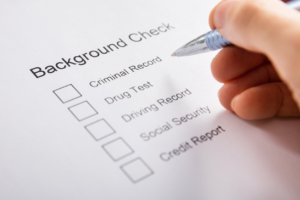
If you’re aiming for one of the highest-paying criminology jobs or building a career in the justice system, you already know that a clean record matters.
But background checks for legal and law enforcement roles go far beyond a quick criminal scan.
They’re intensive, often invasive, and they examine parts of your past you probably haven’t thought about in years.
Whether you’re pursuing a seat at the bar, a badge on the street, or a bench in a crime lab, the screening you face can feel like a trial before you ever step into a courtroom.
Many outcomes turn on individual review, but some roles have firm disqualifiers.
Knowing what’s coming gives you a serious advantage.
Attorney Licensing and Bar Character and Fitness Reviews
Becoming a lawyer isn’t just about passing the bar exam.
Every state requires a moral character and fitness review before you can be licensed, and that process can be just as challenging as any essay question.
The key thing to understand right away: a felony conviction does not automatically disqualify you in most states.
According to Second Chance Info, every state uses an individualized assessment that weighs the nature of the offense, how much time has passed, evidence of rehabilitation, and your conduct since the conviction.
That said, three states have built formal hurdles into their rules.
- Kansas enforces a five-year ineligibility period after a felony under Supreme Court Rule 709.
- Mississippi imposes a statutory bar with narrow exceptions under Miss. Code Ann. § 73-3-41.
- Texas applies a rebuttable presumption against fitness for any felony under Texas Board of Law Examiners Rule 4(d).
Meanwhile, Florida, Georgia, and Ohio won’t even consider your application if you’re still serving probation or parole.
You’ll need to complete every part of your sentence before you can walk through that door.
Financial crimes, like fraud, embezzlement, identity theft, etc., draw extra scrutiny.
They hit harder because attorneys handle client money and carry fiduciary duties.
The same Second Chance Info analysis points out that bar examiners view fraud-related offenses as directly relevant to the trustworthiness required for practice.
If you want a glimpse of how deep this dive goes, look at Florida.
The Character and Fitness application runs about 40 pages and demands disclosure of criminal misconduct, litigation, financial delinquencies, academic misconduct, and a full ten years of employment history with reasons for leaving every job, according to Florida Bar Hearings.
It also scrutinizes dismissed charges, credit history, bankruptcies, unpaid taxes, academic and professional misconduct, substance abuse, and even your traffic ticket and driver’s license suspension record since age 16.
If you’ve ever wondered why some aspiring lawyers get tripped up before they even start, this is why.
Law Enforcement Background Checks: Local, State, and Federal
Local Police Screening Criteria
Police background checks aren’t just employment screenings.
They’re full-scale investigations that can reach into every corner of your personal life.
According to Go Law Enforcement, common disqualifiers include felony convictions, serious misdemeanors, current drug use or past abuse, dishonorable discharge, bad credit, domestic violence history, a problematic driving record, unreported past crimes, gang affiliations, and a poor employment record.
One of the hardest rules: Any domestic violence conviction, even a misdemeanor, bars you from carrying a firearm and therefore from wearing the badge.
The process itself can feel like a deep excavation.
Investigators may interview family and friends, pull education records and transcripts, check disciplinary actions, comb through your employment history, run your credit, and trace your drug use history.
In some cases, they’ll travel to your birthplace and speak with ex-spouses from the past ten years.
And here’s a non-negotiable: under 18 U.S.C. § 1001, knowingly falsifying or concealing a material fact on your application is a felony that can bring fines up to $10,000 and up to five years in prison.
Honesty isn’t just the best policy here; it’s the only one that keeps you out of jail.
FBI Special Agent and Federal Agency Screening
If you’re eyeing a spot at the FBI, the screening gets even more exacting.
The list of automatic disqualifiers includes any felony conviction, a domestic violence misdemeanor or worse, violation of the FBI Employment Drug Policy, default on a government-insured student loan, failure to register with Selective Service, and failure to pay court-ordered child support.
The drug policy draws a sharp line: No marijuana within three years of applying, and no other illegal drug within ten years.
Once you get a conditional appointment offer, the real background investigation begins.
Expect credit checks, arrest-record searches, a polygraph, and interviews with past employers, neighbors, and personal references.
The average duration is about six months, though candidates who have lived or worked extensively abroad can wait up to 18 months.
For anyone targeting the FBI Honors Internship Program, the screening includes a polygraph, a drug test, and verification of citizenship, employment, and criminal history.
Any felony conviction or serious criminal record will knock you out.
You can read more about those FBI internship background check requirements for the full picture.
Other federal agencies follow a similar playbook. U.S. Customs and Border Protection, for example, can take 12 months or longer to complete fingerprints, a polygraph, and a security-clearance-level background investigation.
Even roles like Postal Inspectors, who are sworn federal law enforcement agents, require candidates to be ages 21 to 37, hold a bachelor’s degree, and pass a criminal background check, according to Legal Career Path.
When a federal agency digs into your history, a federal background check is what they’re running.
That means combing through the PACER database, which holds over one billion documents from all 94 federal district courts.
Misdemeanors, felonies, financial crimes, and even some non-criminal matters all show up here.
For legal career hopefuls, knowing what’s in that federal file before it’s pulled can save you a world of trouble.
Forensic Science, Crime Lab, and Adjacent Investigative Roles
Forensic science careers sit at the intersection of science and the legal system, and that means the background check is just as serious as what you’d face on the law enforcement side.
As Legal Career Path notes, forensic candidates must complete a background check as part of hiring, and refusing it will almost certainly withdraw your candidacy.
For most crime lab analyst and forensic technician positions, you’ll also face a polygraph, drug test, and possibly physical and psychological testing.
Where you work makes a huge difference.
Federal agencies like the FBI, DEA, and ATF generally disqualify applicants with felony convictions.
But private labs, consulting firms, academic institutions, and tech-focused forensic roles can be more flexible.
Then there are other law enforcement-based forensic roles, such as crime scene investigators employed by police departments, that almost always require a clean criminal record, firearm eligibility, and access to sensitive databases.
Even with degrees and experience, a felony conviction will typically close that door.
Bounty hunting sits in a similar gray zone, where federal and state laws often bar felons from sworn positions involving guns or security clearances, though a few paths still exist in some states.
Paralegal and Law Firm Staff Employer Checks
Paralegals sit in a different screening chair.
There’s no federal mandate requiring a background check for paralegal jobs, and federal law doesn’t license paralegals at all.
But don’t let that fool you. Most legal employers still screen, and they do it because they’re handing you client files, confidential data, and access to the firm’s reputation.
Typical paralegal background checks cover county, state, or federal criminal searches, employment verification, and identity confirmation.
The offenses that raise red flags are the same ones that would alarm any lawyer: dishonesty, fraud, or misuse of information.
Yet a criminal record doesn’t automatically disqualify you.
Employers evaluate severity, relevance to your duties, and how much time has passed.
An old misdemeanor often lands differently than a recent or repeated one.
If you’re honest about your history and can show how far you’ve come, many firms will still give you a shot.
What a Criminal Background Check Actually Covers
When an employer runs a criminal background check, you might picture them pulling up a single database and moving on.
In reality, it’s a multi-layered sweep that can include national and county criminal searches, sex offender registries, global watchlists, and federal court records.
That federal component taps into the PACER system, which provides public access to over one billion documents from federal courts, covering everything from felony convictions to federal civil cases exceeding $75,000.
Under the Fair Credit Reporting Act, federal background checks can report non-conviction records for up to seven years, bankruptcies for up to ten years, and criminal convictions without any time limit.
Those limits may not apply if the expected salary tops $75,000.
And here’s something many candidates overlook: Including aliases can help find up to 27% more criminal records, because courts don’t always include every name you’ve used and may not retroactively update records after a name change.
Federal checks typically surface financial crimes like fraud, embezzlement, bank robbery, and counterfeiting, alongside high-level offenses like drug trafficking and kidnapping, as well as jurisdictional crimes against federal employees or on federal property.
For anyone entering the legal field, understanding the full scope of what these checks dig up is the first step toward managing them.
How to Prepare Before You Apply
You can’t control everything a background check will find, but you can control how ready you are.
Here are six steps that put you back in the driver’s seat.
- Run a personal background check early. Before any employer pulls your record, run a background check for employment on yourself so you know exactly what’s out there and can dispute errors before they become obstacles.
- Pull your own records, including court records, driving record, credit reports, employment history, and any known aliases. You want to see what the investigator will see.
- Be complete and truthful on every application. Under 18 U.S.C. § 1001, knowingly falsifying or concealing a material fact on a law enforcement application is a felony offense. The risk of omission is far greater than any discomfort that comes with disclosure.
- Prepare rehabilitation evidence. Second Chance Info recommends gathering proof of completed sentences (incarceration, probation, parole), any expungement, pardon, or sealing, documented rehabilitation, a Certificate of Rehabilitation if available, evidence of long-term recovery from drug or alcohol offenses, and strong character references from professors, employers, and community leaders. A non-violent felony with five or more years elapsed carries different weight than one from last year.
- Expect to disclose sealed or expunged records on bar character and fitness applications, even if new state laws offer protection elsewhere. Virginia’s Clean Slate record-sealing law took effect July 1, 2026, and Illinois will implement automatic sealing in 2029. But most state bars still require you to disclose sealed or expunged records, so assume the board will ask.
- Understand what a failed background check actually means. A “failed” background check isn’t a career death sentence. It simply means the report returned hits like criminal records, employment discrepancies, or failed drug tests. Employers must then follow FCRA pre-adverse and final adverse action notice requirements, giving you a chance to review and dispute.
Federal roles add another layer: Defaulted government-insured student loans and unpaid court-ordered child support can be disqualifying, as FBI Agent EDU confirms.
Clean up those financial loose ends before you apply.
Caveats and Counterpoints
The discussion above is helpful general advice, but there are nuances:
- Background checks aren’t uniform disqualifiers. Attorneys, paralegals, and even many forensic professionals are evaluated through individualized assessments rather than automatic bans. But variation across states and agencies remains enormous.
- No single federal rule governs every legal or law enforcement career.
- Record-clearing laws are expanding, yet licensing boards may still require disclosure.
- Screening data can also be incomplete or inaccurate, and the FCRA gives you dispute and adverse action rights.
When you run into a red flag, don’t assume the worst.
Dig into the details.
Final Takeaway
The background check is a predictable gatekeeper in legal and law enforcement careers.
Once you know which screen applies, whether it’s a licensing-level character and fitness review, hard law enforcement disqualifiers, or an employer-level criminal and employment verification, you can prepare instead of dread.
Requirements shift by jurisdiction and agency, so always check the current rules in your state before you apply.
Start early, disclose honestly, and lean on the FCRA process if adverse results surface.
You’re not powerless in this process. You just need to know the playbook.


Leave Your Comment