

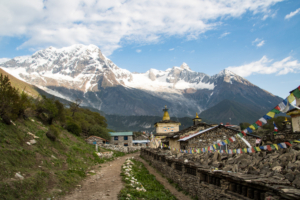
The Manaslu Circuit Trek is one of Nepal’s most adventurous and rewarding trails, circling the world’s eighth-highest mountain, Mount Manaslu (8,163m).
Unlike the more commercialized Annapurna or Everest regions, Manaslu remains remote and culturally rich, offering trekkers an authentic Himalayan experience.
However, because this region lies close to the Tibetan border and is classified as a restricted area, trekkers are required to obtain multiple permits before setting out.
If you’re planning your trek, understanding the necessary permits, their costs, and how to obtain them will help you avoid complications and plan your budget effectively.
Since permits make up an essential part of the Manaslu Circuit Trek cost, this guide breaks down everything you need to know.
Why Are Permits Required for the Manaslu Circuit Trek?
The Manaslu region is designated as a restricted trekking area by the Government of Nepal.
This regulation is in place for several reasons:
- Cultural preservation: The region is home to Tibetan-influenced communities with centuries-old traditions. Controlled tourism helps protect their culture.
- Environmental protection: Limiting trekkers ensures the conservation of the fragile mountain ecosystem.
- Border security: Manaslu lies near the Nepal–Tibet border, and permits allow authorities to monitor movement in the sensitive region.
Because of these reasons, solo trekking is not permitted.
You must trek with a registered Nepali trekking agency and a licensed guide, who will arrange the necessary permits on your behalf.
Required Permits for the Manaslu Circuit Trek
1. Restricted Area Permit (RAP)
The Restricted Area Permit is the most important document for the trek.
Its cost depends on the trekking season:
- Peak season (September–November): USD 100 per person for the first 7 days, then USD 15 for each additional day.
- Off-season (December–August): USD 75 per person for the first 7 days, then USD 10 for each additional day.
The number of days is calculated based on your itinerary, especially from Jagat to Dharapani (the restricted section).
Example: If you take 10 days from Jagat to Dharapani in October, your RAP cost will be USD 145 (USD 100 + USD 15 × 3 days).
2. Manaslu Conservation Area Permit (MCAP)
The Manaslu Conservation Area is rich in biodiversity, covering lush forests, endangered wildlife, and pristine alpine landscapes.
To enter, trekkers must pay NPR 3,000 (about USD 25) per person.
This fee directly supports conservation and local community projects.
3. Annapurna Conservation Area Permit (ACAP)
The Manaslu Circuit connects with the Annapurna Circuit at Dharapani, meaning trekkers also need the ACAP.
Its cost is NPR 3,000 (about USD 25) per person.
Even if you are not continuing far into the Annapurna region, this permit is mandatory once you step into Dharapani.
4. TIMS Card (Not Required)
Normally, trekkers in Nepal require a TIMS (Trekkers’ Information Management System) card.
However, since Manaslu is a restricted area, the TIMS card is not needed.
This simplifies the paperwork but does not reduce the overall Manaslu Circuit Trek cost significantly because of the RAP fee.
Total Cost of Permits for the Manaslu Circuit Trek
To summarize, here’s what you’ll need to budget:
- Restricted Area Permit (RAP): USD 75–100 for 7 days, plus USD 10–15 per extra day.
- MCAP: USD 25
- ACAP: USD 25
On average, the total permit cost for the Manaslu Circuit Trek ranges between USD 125–150 per person, depending on the season and the length of your restricted area stay.
Who Issues the Permits and How to Get Them?
Only registered trekking agencies in Nepal can apply for the RAP, while MCAP and ACAP can be obtained either in Kathmandu or Pokhara.
Since individual trekkers are not allowed in Manaslu, you must go through a licensed trekking company.
The process usually looks like this:
- Book a trek with a trekking agency.
- Provide your passport copy, photographs, and travel dates.
- The agency applies for your permits.
- You receive the permits before starting your trek.
This saves you time and ensures that all your paperwork complies with government regulations.
Are Permits Included in the Manaslu Circuit Trek Cost?
In most trekking packages, yes.
If you book a full-service trek through a Nepali agency, the cost usually covers permits, guide, porter, accommodation, meals, and transportation.
However, if you choose a budget package or hire only a guide, you should clarify whether permit fees are included or must be paid separately.
When calculating the Manaslu Circuit Trek cost, it’s important to add permits on top of other expenses:
- Guides: USD 25–35 per day
- Porters: USD 20–25 per day
- Transportation (Kathmandu–Soti Khola/return): USD 25–35 each way by bus or jeep
- Accommodation and meals: USD 25–30 per day
A complete trek usually costs between USD 1,000–1,500 per person, depending on group size, services, and trek duration.
Final Thoughts
Securing the correct permits is the first step to experiencing the adventure of the Manaslu Circuit Trek.
The fees may feel like an extra expense, but they are crucial for conservation, cultural preservation, and safety in this remote region.
When planning your trek, make sure to factor in permit costs along with guide services, transportation, meals, and gear.
On average, the permits alone add around USD 125–150 to the overall Manaslu Circuit Trek cost.
With the paperwork handled and your permits in hand, you’ll be ready to enjoy one of Nepal’s most stunning trails—complete with towering Himalayan peaks, Tibetan-influenced villages, and the unforgettable challenge of crossing Larke La Pass (5,160m).
The Manaslu region remains less crowded than Everest or Annapurna, making it a perfect choice for those seeking raw Himalayan beauty and cultural authenticity.
With the right preparation and permits secured, your Manaslu adventure will be a journey of a lifetime.
Frequently Asked Questions
Can I trek Manaslu without a guide?
No.
Due to the restricted area regulation, a licensed guide is mandatory
Can I get permits on my own?
You cannot apply for the Restricted Area Permit independently.
It must be done through a registered trekking agency.
Are there checkpoints on the trail?
Yes, multiple checkpoints exist along the route where officials verify your permits.
Carry them with you at all times.
Are children required to pay for permits?
Yes, permit fees apply to everyone, though some conservation areas may offer discounts for children under 10 years.
How long does it take to arrange permits?
Most agencies can arrange them within a day or two, provided you submit all required documents.


Leave Your Comment