

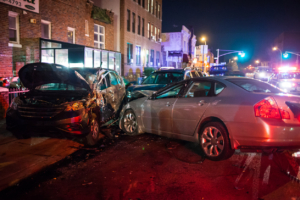
Distracted drivers.
Delivery trucks blocking lanes.
Rideshare cars cutting left without a signal.
The roads aren’t getting calmer and neither are the minutes after a collision.
Every year, people walk away from crashes and make decisions that cost them thousands.
Not because they’re reckless.
Because nobody told them what to actually do.
That’s what this is for.
Your Brain After Impact: It’s Not Working Right
Nobody warns you about this part.
Adrenaline hits hard after a crash.
Hands shake.
Vision narrows.
And here’s the strange part — some people feel nothing at all.
No pain, no fear.
That calm isn’t safety.
It’s shock.
A 2009 case in Southern California: a driver walked away from a freeway pileup near LA, waved off the paramedics, drove home.
Three days later, traumatic brain injury.
Whiplash doesn’t always bite immediately. Concussions can feel like a headache you’d shrug off on a Tuesday.
Rule one: assume something is wrong even if nothing hurts yet.
Sit down. Five minutes before any decisions.
The First Ten Minutes — Written Out, Not Just “Stay Calm”
“Stay calm” is useless advice. A checklist isn’t.
- Don’t move the car if someone’s hurt — unless it’s actively making things worse, like sitting in a live intersection. Shoulder of a quiet road? Leave it.
- Check everyone in the vehicle. Unconscious, bleeding, neck pain — those are 911 calls. Not “I’ll wait and see.”
- Call the police anyway. Minor fender-bender, nobody bleeding — still call. A police report in California has legal weight. Insurance companies will tell you to skip it. They’re wrong about that one.
- Document everything before vehicles move. Both cars, their positions, damage, skid marks, traffic lights, nearby cameras, street signs. Photos. All of it.
At the Scene: What Comes Out of Your Mouth Matters
Most people apologize reflexively.
Doesn’t matter who ran the red light — “I’m so sorry” is the first thing out.
That’s an admission.
Not legally bulletproof, but it gets used.
Don’t say: “I didn’t see you.” Don’t say: “I should’ve been paying attention.” Even something casual — “I was looking at my phone for a second” — that’s in someone’s notes now.
What’s fine to say: “Are you hurt? I’ve called 911.”
Exchange insurance, name, license plate.
Stay civil, stay quiet about fault.
The other driver might push.
Might get loud.
The answer is still neutral.
Why Legal Help in the First Week Isn’t Jumping the Gun
California gives two years to file a personal injury claim.
Sounds like a lot.
It disappears fast once you’re counting backward from depositions and medical record requests.
An experienced auto accident lawyer California handles things most people don’t know are time-sensitive: locking down surveillance footage before businesses overwrite it, getting witness statements before recollections drift, cutting off direct contact with the at-fault driver’s insurer before something gets said that shouldn’t be.
The Uber liability mess of 2017–2019 made this painfully clear.
Dozens of California crash victims discovered their rideshare cases were legally complicated and tried to handle insurance negotiations themselves.
Most of them settled for less than their medical bills alone.
Medical Records: The Paperwork That Pays
No paper trail, no case.
That’s the reality.
See a doctor within 24 to 48 hours, even with zero symptoms.
Get examined.
Tell the doctor it was a car accident — get that in the record. Every vague complaint goes in: mild headache, tight neck, trouble sleeping.
“I feel fine” gets written down too, but “patient reports neck stiffness following MVA” is what matters in a settlement.
Don’t skip physical therapy appointments.
Missed sessions get framed by insurers as proof the injuries weren’t serious.
That argument lands.
Keep a daily log.
Pain in the morning.
Anxiety while driving.
Can’t concentrate at work.
These are real damages — they just need to exist somewhere on paper.
The Other Driver’s Insurer Will Call. Be Ready.
Polite voice, friendly tone, title like “claims specialist.” They want a recorded statement.
They want it fast, before the full picture of injuries is clear.
Don’t give one without an attorney.
The quick settlement offer (the one that shows up before treatment is even finished) isn’t generosity.
It’s a closing move.
Sign that release and the case ends.
No going back when surgery becomes necessary three months later.
Whose Insurance Do You Actually Call?
Plenty of people get this wrong and it creates complications that drag out for months.
The clearest breakdown of whose insurance to call after accident comes down to fault and coverage.
If the other driver caused it and has insurance, the third-party claim goes to their carrier.
That’s the standard path in California, which is not a no-fault state.
But when liability’s disputed, your own policy steps in.
Medical payments coverage, PIP, uninsured motorist coverage: these exist for exactly this situation.
Calling your own insurer when you weren’t at fault doesn’t automatically raise premiums, but knowing what your policy covers before making that call matters.
Short version: if liability is even slightly unclear, talk to an attorney before talking to any insurer.
What a Claim Is Actually Worth
Most people think: medical bill is $4,000, maybe get $4,000 back.
It doesn’t work like that.
A California personal injury claim covers medical costs, lost wages, reduced earning capacity if injuries are lasting, property damage, pain and suffering, and emotional distress.
The non-economic damages are often the largest piece.
They’re also the hardest to value without someone who does this for a living.
Insurers run everything through algorithms.
Attorneys argue with those algorithms.
180 Days: The Government Claim Window Nobody Mentions
If a pothole, broken traffic signal, or bad road design contributed to the crash, the clock is shorter.
Claims against California government entities have a 180-day limit from the accident date.
Miss it — gone.
Six months sounds like a margin.
Factor in recovery, car repairs, missed work, and it’s tight.
Any accident near a city-managed intersection or on a state highway is worth asking about.
Early.
Build a File Starting That Day
One folder — physical or digital.
Police report number.
Scene photos.
Every medical receipt.
Every email from insurance.
Voicemails from adjusters, saved.
Prescription records.
Rental car receipts.
That file is leverage.
Leverage turns a lowball offer into something worth signing.
Start it the day of the crash.
Keep everything.
No photos of the damage.
No “finally feeling better” posts.
No vague updates.
Adjusters check.
A claim involving back pain looks different when the claimant’s Instagram shows a hike three weeks later — even a slow, painful one.
Even one the doctor approved.
Private accounts immediately.
Quiet until resolution.
Final Word
Wrong decisions in the first hour after a crash can follow people for years.
Unpaid medical bills, undersettled claims, expired legal windows.
None of it has to happen that way.
The chaos right after impact is temporary.
What gets documented, signed, or said in that window — that part stays.
This article is for general informational purposes only and does not constitute legal, medical, or financial advice.
Laws vary by jurisdiction.
Consult a qualified attorney for guidance specific to your situation.


Leave Your Comment