
According to ONET Online (American Job Center network partner), the outlook for law enforcement careers is bright, meaning occupations are expected to have a large number of job openings over the next several years (321,700 new job openings projected for 2023-2033).
There are many types of law enforcement careers an individual may pursue.
The three basic types of jobs in law enforcement are investigators, uniformed officers, and support positions.
These jobs are available at the local, state, and federal levels.
Uniformed Officers
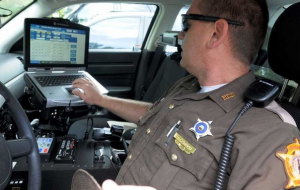
A uniformed police officer has general duties, including responding to emergency calls and maintaining a regular patrol.
Uniformed officers may direct traffic after an accident, investigate robberies, or provide first aid to a victim in an accident.
At larger police departments, an officer may be assigned to a specific area of duty.
A lot of urban police agencies have community policing practices.
This is where the officers build relationships with people in the community and encourage the public to help with fighting crime.
Investigators
A detective is a plain-clothed investigator who has the job of collecting the evidence surrounding criminal cases.
Some investigators work in specific areas of crime.
An investigator will examine records, conduct interviews, and observe the suspect’s activities.
Additionally, investigators participate in arrests and raids.
State and federal agents, as well as some detectives on the local level, will often specialize in one area, such as fraud or homicide.
An agent will be assigned a case on a rotating basis.
They work the case until an arrest is made or until it is dropped.
Some investigators are private investigators who work as freelancers for clients or law enforcement entities.
Support Positions
Other careers in law enforcement include support positions such as ballistics examiners, evidence technicians, intelligence analysts, and crime lab technicians.
Many of these positions are filled with individuals who were hired for a specific area of work.
Evidence technicians are often in charge of inventorying the evidence found by the investigators.
Becoming a Police Officer
For those who are interested in a job in the law enforcement industry, it is important to look at public vacancy announcements.
Most job announcements are for a limited amount of time and have a cutoff date for applications.
Most police offices only accept applications when there is a vacancy.

Requirements
The minimum requirements for becoming a police officer will vary by department.
There are some departments that will require a person to have 60 college credits, and others require that a person have a four-year degree.
Some police departments will hire someone who only has a high school diploma.
However, in most cases, students with law enforcement degrees have more opportunities.
There are no certifications or experience required for entry positions in the law enforcement field.
Other requirements may include an age restriction of being at least 21 years of age.
There are also maximum age requirements set by some departments.
Most police departments will also require that a person have a valid driver’s license in the state they are applying in, and may also require a person to live in a specific area.
Physical examinations are often required by most police departments before hiring.
A person will receive all of their training at the police academy.
This includes how to make arrests, using a weapon appropriately, as well as other aspects of the job.
U.S. Average Salary: $79,200
Salary Information by State
| State | Employed | Avg. Annual | Avg. Hourly | Top 10% | Bottom 10% |
|---|---|---|---|---|---|
| Alabama | 11,710 | $55,130 | $26.51 | $77,220 | $37,480 |
| Alaska | 1,260 | $101,770 | $48.93 | $137,340 | $60,670 |
| Arizona | 12,010 | $81,720 | $39.29 | $98,560 | $60,990 |
| Arkansas | 5,710 | $49,850 | $23.96 | $70,190 | $35,210 |
| California | 65,940 | $112,980 | $54.32 | $153,190 | $76,300 |
| Colorado | 9,610 | $90,550 | $43.54 | $109,300 | $65,340 |
| Connecticut | 6,500 | $83,920 | $40.35 | $102,660 | $63,310 |
| Delaware | 1,800 | $93,210 | $44.81 | $130,870 | $62,470 |
| D.C. | 4,720 | $92,390 | $44.42 | $119,660 | $66,420 |
| Florida | 43,630 | $75,320 | $36.21 | $98,190 | $51,330 |
| Georgia | 22,170 | $58,520 | $28.14 | $76,250 | $43,690 |
| Hawaii | 2,420 | $90,360 | $43.44 | $108,110 | $77,480 |
| Idaho | 2,810 | $70,860 | $34.07 | $97,980 | $48,840 |
| Illinois | 29,180 | $92,450 | $44.45 | $119,560 | $58,420 |
| Indiana | 12,980 | $75,130 | $36.12 | $100,010 | $52,170 |
| Iowa | 5,130 | $76,280 | $36.67 | $101,520 | $59,360 |
| Kansas | 6,130 | $61,450 | $29.55 | $90,530 | $42,040 |
| Kentucky | 7,890 | $59,840 | $28.77 | $77,970 | $38,780 |
| Louisiana | 12,400 | $51,250 | $24.64 | $69,140 | $36,470 |
| Maine | 2,120 | $69,830 | $33.57 | $91,270 | $55,930 |
| Maryland | 9,720 | $82,400 | $39.62 | $113,700 | $58,580 |
| Massachusetts | 17,040 | $83,230 | $40.01 | $108,150 | $61,160 |
| Michigan | 16,750 | $70,310 | $33.80 | $89,220 | $47,780 |
| Minnesota | 9,160 | $85,130 | $40.93 | $106,160 | $60,670 |
| Mississippi | 8,070 | $47,010 | $22.60 | $61,550 | $33,230 |
| Missouri | 13,570 | $62,520 | $30.06 | $90,770 | $43,210 |
| Montana | 2,160 | $69,540 | $33.43 | $84,150 | $55,330 |
| Nebraska | 3,490 | $75,290 | $36.20 | $95,210 | $54,680 |
| Nevada | 5,720 | $86,470 | $41.57 | $102,810 | $62,250 |
| New Hampshire | 2,460 | $70,630 | $33.96 | $89,940 | $57,930 |
| New Jersey | 21,780 | $93,700 | $45.05 | $134,260 | $57,740 |
| New Mexico | 4,580 | $66,700 | $32.07 | $85,740 | $48,400 |
| New York | 53,470 | $87,110 | $41.88 | $118,250 | $53,000 |
| North Carolina | 22,370 | $61,390 | $29.51 | $80,240 | $46,040 |
| North Dakota | 1,630 | $72,400 | $34.81 | $91,440 | $58,620 |
| Ohio | 23,430 | $76,730 | $36.89 | $103,210 | $51,110 |
| Oklahoma | 9,660 | $63,120 | $30.34 | $94,940 | $36,480 |
| Oregon | 5,030 | $87,990 | $42.30 | $109,350 | $66,380 |
| Pennsylvania | 26,510 | $81,910 | $39.38 | $109,780 | $48,680 |
| Rhode Island | 1,940 | $78,760 | $37.86 | $91,760 | $59,020 |
| South Carolina | 12,930 | $60,420 | $29.05 | $78,760 | $45,060 |
| South Dakota | 2,000 | $64,320 | $30.93 | $91,900 | $47,540 |
| Tennessee | 15,630 | $61,830 | $29.72 | $79,480 | $43,520 |
| Texas | 63,100 | $76,160 | $36.62 | $98,350 | $51,240 |
| Utah | 5,500 | $78,760 | $37.87 | $99,920 | $60,290 |
| Vermont | 1,020 | $70,560 | $33.92 | $95,530 | $53,950 |
| Virginia | 19,970 | $70,450 | $33.87 | $96,820 | $50,000 |
| Washington | 9,160 | $104,140 | $50.07 | $132,200 | $79,120 |
| West Virginia | 2,900 | $55,900 | $26.88 | $69,980 | $41,950 |
| Wisconsin | 12,320 | $76,560 | $36.81 | $94,450 | $58,530 |
| Wyoming | 1,310 | $67,080 | $32.25 | $76,840 | $57,130 |
| Guam | 540 | $66,940 | $32.18 | $98,030 | $36,590 |
| Puerto Rico | 11,640 | $42,920 | $20.63 | $50,240 | $30,500 |
Annual Average Salary: Top 10 States
California tops the list in this field, with an average salary of $112,980.
These are the leading 10 states in terms of earnings in the field:
* Salary estimates are based on data from the May 2025 Occupational Employment Statistics (OES) survey by the Bureau of Labor Statistics for Police and Sheriff's Patrol Officers, (SOC Code 33-3051).* Employment opportunities may vary depending on your area.



By exploring the work of criminologists through articles, we gain a deeper appreciation for the critical role they play in shaping our criminal justice system and working towards a safer, more equitable society.
I want to be a criminologist! They are champions of social change, working tirelessly to reduce crime rates, support victims, and create a safer, more compassionate world.
Community trust is a vital aspect of this field, and maintaining that trust is both a challenge and a rewarding part of a law enforcement career.
Law enforcement professionals often build strong bonds with their colleagues, which can be a great source of camaraderie and support.
It’s important to acknowledge the difficulties as well, such as the stress nd the potential dangers that come with the job. Proper training and support are crucial.
It’s a challenging career. It provides a chance to make a real difference in your community and uphold the principles of justice.
As a layman always says a state without law there is no crime and if the is law there
is crime
Reading through the different law enforcement careers was eye opening. I always thought it was mostly about becoming a police officer, but seeing options like detective, federal agents, and crime scene investigators showed how many directions someone can take in this field. The salary info was helpful too.